What is the recommended minimum distance the eCompass products must be from any non-magnetic ferrous material to ensure their performance is not affected?
Answer: It depends on the configuration of the ferrous material. You must be farther from a steel bridge or building than from a steel bolt or nut. Even if the ferrous material is not magnetized, it is still magnetic and has a soft-iron effect that changes the direction of earth’s magnetic field.
Just in case if the ferrous material is magnetized, is there a “safe” distance for the eCompass to be located? Or will it depend on the intensity level of the magnetic field?
Answer: It depends on both this hard-iron effect and soft-iron. The hard-iron field intensity drops as the square of the distance from the source (if it’s considered a point source). The soft iron warping effect is not as easy to quantify.
Is there a possibility to shield the eCompass from hard & soft iron interferences?
Answer: No. You would need to shield the Earth’s field. Magnetic shielding (like mu metal) cannot discriminate between the field you want to measure and disturbing fields. In addition, a magnetic shield works by absorbing the field rather than simply blocking it. So if you’re outside the shield, the nearby field is warped.
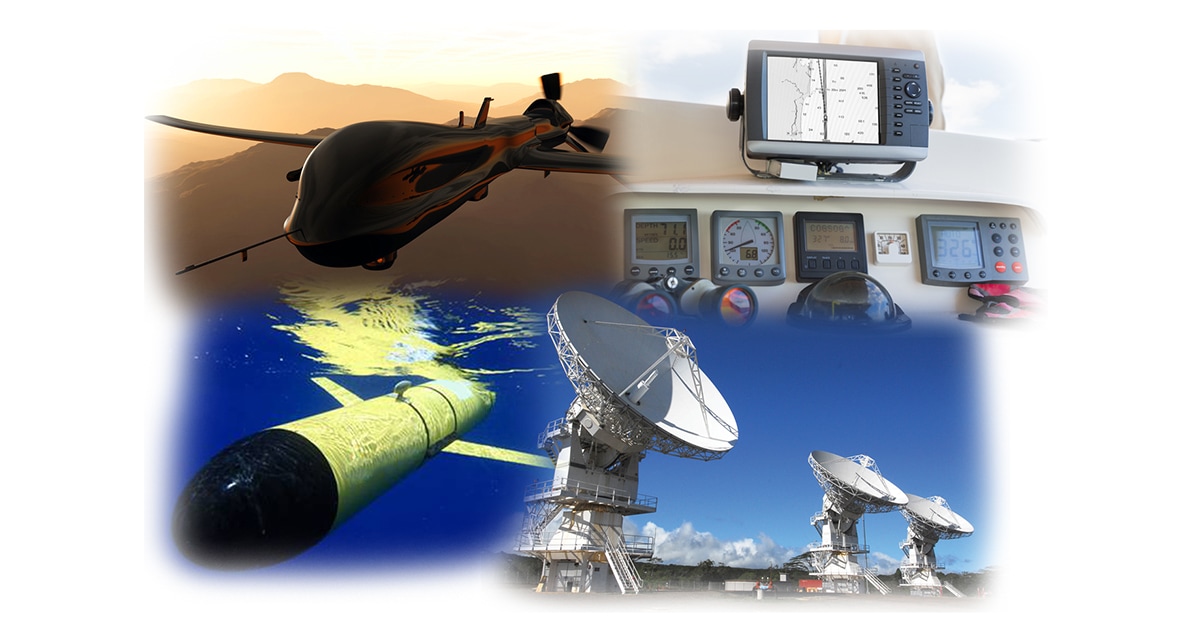
What are some of Unmanned Vehicle applications that our eCompass products can be used for?
Answer:
- FOG stabilization – short term heading while FOGs are spinning up
- Supplemental navigation in areas where GPS is not available or is at risk from a security breach
- Primary navigation in underwater applications
- Pointing or stationary applications where GPS can’t accurately determine heading
- Magnetic calibration of existing (other vendors’) sensors
- Primary navigation in cost sensitive applications
What are some applications that electronic compass would not be suitable for?
Answer: Broadly speaking, applications in which the local magnetic environment changes will cause difficulties for any of the eCompasses. Compasses can be calibrated for magnetic effects that move with the compass but cannot compensate for those that are not included in its calibration routine. For example, if a compass is mounted to an antenna system and is calibrated in a magnetically clean area, but is then repositioned on a cement pad that contains rebar, the heading accuracy will be diminished. Likewise, on a vessel or vehicle, if the eCompass is to be mounted on a turret, or other rotating structure, even if a calibration is performed by rotating the entire vessel or vehicle, when the turret rotates relative to its base, the calibration is no longer valid. Anytime you are going to be near magnets or ferrous material, you have to be very careful.
Does the eCompass replace GNSS sensors for antenna stabilization and pointing?
Answer: Antenna positioning is one of the most popular applications for eCompasses. They can detect both elevation and azimuth however they do not provide location.